
Chapter 14: Records and evidence

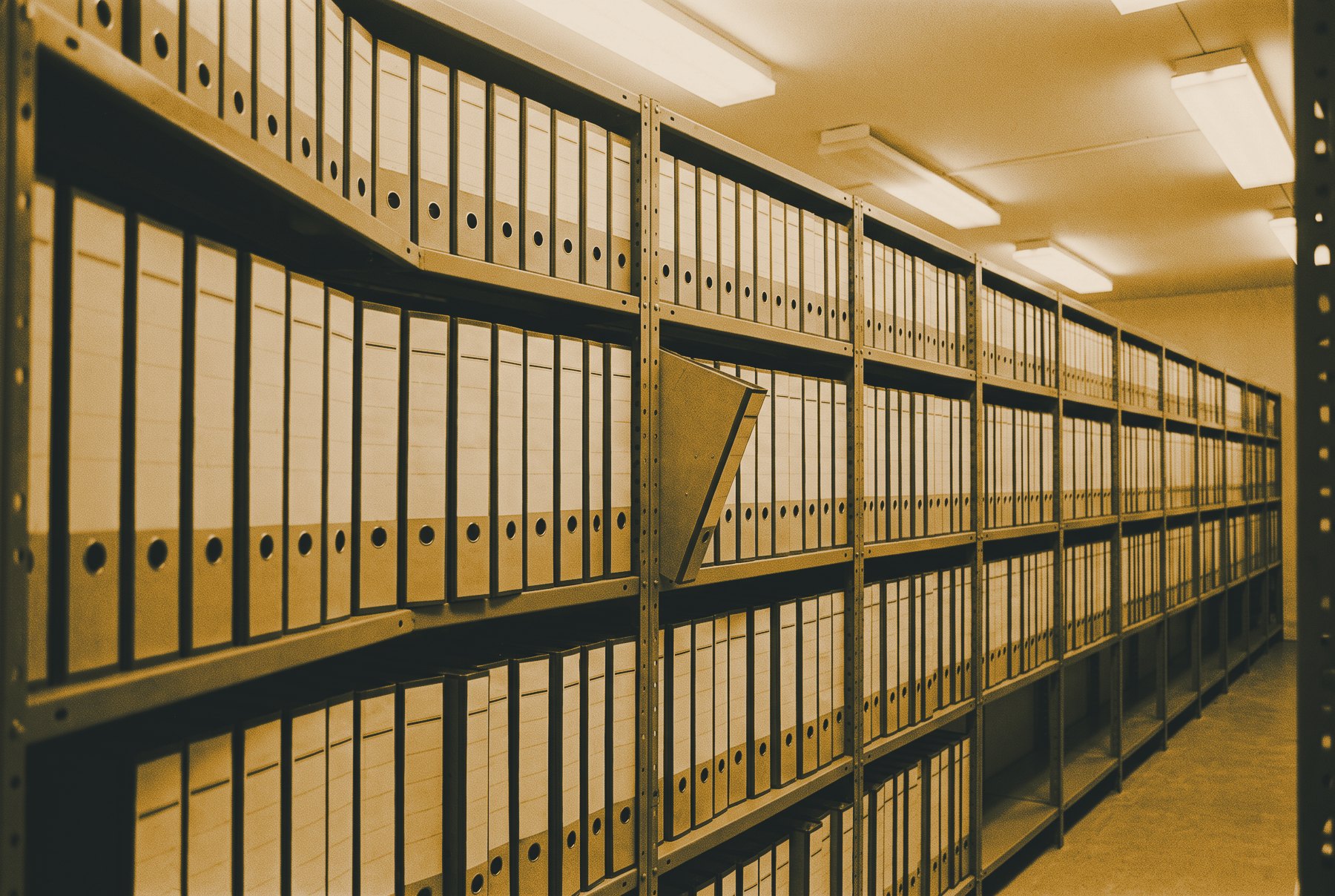
Every delay claim turns on facts. What did the contractor plan? What actually happened, when, and why? What did it cost? A tribunal answers those questions years later, from the documents the project produced while it was running: the programme and its updates, daily reports, labour and plant returns, cost records, letters, emails and minutes. The core principle is that a record made at the time is better evidence than anyone's memory, because it was written before anyone knew which facts would matter. So the side with the better records usually wins. And a claim that the records never mention is hard to believe.
A pipeline case shows how far that goes. In 2011 and 2012 a joint venture called OSR laid the onshore section of a gas export pipeline on Shetland for a contractor, AUK (Van Oord v Allseas [2]-[5]). At trial OSR claimed more than £8 million for problems with temporary crossings ([333]). Its own change order request for the same events, dated 18 November 2011, had put the likely value of the claim at £100,000 ([332]). The first notice of a sizeable claim came ten months after the events, at £4.3 million ([333]). Coulson J called the contrast startling. The claim failed on liability and for want of notice as well ([334]), but the lesson is about the paper. The figure written at the time was the believable one.
14.1 Why the records decide
A delay claim asks the tribunal to find facts. To get an extension of time, the contractor must show that an event at the employer's risk actually delayed completion (chapter 3). To get money, it must show that the event caused it loss (chapter 13). The party making the claim has to prove it on the balance of probabilities (Walter Lilly [486(a)]). In Walter Lilly Akenhead J put the tribunal's task plainly: it is for the Court to decide as a matter of fact what delayed the Works and for how long ([377]). Experts help with that. They do not decide it (chapter 15).
Why should a document made at the time count for more than a witness? The reasons are ordinary ones. A daily report or an email written during the job was written before anyone knew which facts would matter, so nobody had a reason to slant it. It was usually written for the job's own purposes: to pay a gang, chase a drawing or report to the client. It had to be right for those purposes. And it does not fade. A witness statement is written years later, after the claim has taken shape, by someone who honestly remembers the version that fits it.
The Court of Appeal said as much in Simetra v Ikon in 2019. Males LJ said that contemporary documents are generally regarded as far more reliable than the oral evidence of witnesses, although this cannot be regarded as a rule of law ([48]). He added that the point applies with even greater force to a party's internal emails and messages, where a witness's guard is down ([48]). In the Commercial Court in Gestmin, Leggatt J warned against the fallacy of assuming that a confident, honest witness is a reliable guide to what happened ([22]).
The Court of Appeal later said that Gestmin lays down no general principle, and that judges must still decide on all the evidence, and that Gestmin was addressed to commercial cases (Kogan v Martin [88]-[89]). The TCC applies the approach all the same. In Energy Works Pepperall J found that the contractor's main witness had become an advocate for its case. His evidence was either contradicted or not supported by the records made at the time ([20]).
Time makes the point sharper. Thomas Barnes was tried about seven years after the works. HHJ Stephen Davies said that, given the passage of time, he would need to be very convinced before preferring even the fairer witnesses' evidence to the documents on a particular point ([24]). Where the documents did not cover a point, he was prepared to give those witnesses more weight.
Documents do not always win. A record is only as good as the system that made it, and the same judge stressed the need to consider the documents' reliability as records ([25]). In Walter Lilly the employer's expert tried to cut the contractor's preliminaries claim by checking it against the site signing-in book. Akenhead J rejected that, because such books are well known to be unreliable: people do not always sign them, and they miss time spent off site ([500]).
The SCL Protocol puts records first. Its first core principle is that the parties should reach a clear agreement on the type of records to be kept and pay for keeping them. Records must be made as the work goes on, not afterwards (1.7). The Protocol's reason is practical: good records and a properly updated programme reduce the room for argument about the facts (2.2). But the Protocol is guidance. It does not claim to be a statement of the law or to override the contract (Introduction, para B). Most of the practice in this chapter comes from it, so treat it as good practice unless your contract makes it a duty.
Some contracts do. FIDIC's 2017 Red Book (first printing) defines contemporary records as records prepared or generated at the same time, or immediately after the event behind the claim. The claiming party must keep the contemporary records needed to prove its claim (20.2.3). Its fully detailed claim must include all the contemporary records it relies on (20.2.4(c)). Under that form the records are part of the claim itself, and they run to the same timetable as the notices (chapter 4).
14.2 What to keep, and what each record proves
Each kind of record answers one of the claim's questions. The SCL Protocol sorts them into six categories: programme, progress, resource, costs, correspondence and administration, and contract and tender documents (Appendix B). The categories are the Protocol's; matching each to a question is mine.
The programme records answer the first question: what was planned? Once it is updated with actual dates, the programme also records what happened (1.19). It gets a section of its own.
Progress records say what was done, where and when. The main one is the daily report, which many sites call the site diary. The Protocol's list of what a daily report for each work area should record is a good template: weather, labour, deliveries, adverse conditions, working hours, plant and the work under way (Appendix B 2.2(a)). The list goes on: obstructions with the dates they started and ended, the dates each area was handed over, inspections and tests. Take progress photographs, with the date taken and, if possible, the location (2.2(j)). Under FIDIC 2017 the monthly progress report must include photographs or video, unless the Specification says otherwise (4.20(b)).
Resource records say who and what was on site, and what they were doing. The Protocol recommends a daily record of which labour and plant worked in which area, matched at least roughly to the programme activities (Appendix B 3.2). It should say when plant stood idle, and why (3.3). These are the records a disruption claim lives on. Lost productivity is measured by comparing output with the hours spent, and you can only compare what you recorded (chapter 11).
Cost records say what it cost. The Protocol calls them essential to proving the cost of delay (1.30). It says they should be linked, even at a high level, to the events that caused it (1.25). Walter Lilly shows what good ones do. The contractor was building three related projects for the same client. Each month it allocated its staff and other preliminaries between them on allocation sheets, which went into its cost system. Akenhead J accepted the cost system as reliable evidence because it was contemporaneously maintained, backed by disclosed allocation sheets and cross-checked at the time with people on site ([499]). He did cut some of the allocation percentages ([521], [524]). Dull paperwork turned the claim for extra preliminaries into one that was, on analysis, not a global claim at all ([491]).
Correspondence and administration records show what each side said at the time. That means letters, emails, notices, instructions, each request for information and its answer, and the minutes of progress meetings (1.31). The Protocol recommends that each is numbered and dated, with a subject line, and that oral instructions are confirmed in writing (1.32). A log of requests for information shows when the contractor asked for each drawing and when it arrived. In a claim about late information, that log is the core evidence.
Contract and tender documents record the bargain and the price. The tender build-up can prove that the contractor's prices were realistic, which a claim for prolonged preliminaries may need (Walter Lilly [492]; chapter 13).
Two further points apply to all six. The first is that records should state facts, not opinions. The Protocol says progress, resource and cost records should set out facts only and, where practicable, be signed by both the contractor and the certifier (1.12). The certifier is the person who runs the contract for the employer, whom the contract may call the architect, contract administrator, engineer or project manager. The reason is simple. A fact both sides signed at the time is hard to dispute later, and an opinion is only an argument written early.
Van Oord shows the difference. AUK had asked OSR in April 2011 to keep contractual matters out of the daily reports, and OSR later relied on that to explain why they said little about standing time ([53]). Coulson J did not accept the explanation. A report that men or machines stood idle on a given day is not a contractual issue, but a matter of fact ([54]). The reasons for the standing time might be contractual, but the fact of it belonged in the report.
The second point is for employers. If you want particular records, put the requirement in the tender documents. The Protocol warns that adding it after the contract is let could be a variation with a price attached (1.6). It also suggests that the employer keep its own independent records (1.9).
14.3 The programme is a record too
A programme is a calculation, not a picture. The planning file holds the activities, their durations, the logic links between them, calendars, constraints and progress. The software works out the dates, the float and the critical path from those inputs (chapter 2). A PDF of the programme shows the resulting bars: the answer without the working. Delay analysis asks what drove completion, and that depends on the logic. So the tribunal and the other side need the working file, the native file, not a print of it. The Protocol asks for the contractor's programme in its native form, not just as a PDF (1.43).
The programme also changes as the job runs, and each version records what was known and intended when it was saved. That is why the versions matter as much as the file. An extension decided during the works is usually a forecast (chapter 6). What will this event do to completion, on the programme as it stands? Only the update current at the time of the event can answer that. The Protocol recommends updating the programme at least monthly, with actual start and finish dates, percentage complete and remaining durations (1.58). No version of any programme should be overwritten (1.59). Each saved update is a record, made at the time, of how the contractor's intended sequence changed (1.59). If the certifier disagrees with the progress claimed, the Protocol says the certifier's view goes into the update and the contractor's disagreement is recorded with it (1.60).
Take the model project used throughout this guide. It is invented and illustrative: thirteen activities, planned finish week 34, contract completion week 36. Roof design runs four weeks late. Roofing, the M&E and the fit-out all wait for it, and the forecast finish moves from week 34 to week 37. The critical path, which ran through the construction activities, now runs through the design. A contractor that saved each monthly update can show the month in which the path switched, and why. A contractor that saved over one file each month has only the last picture. It can show that the job finished late, but not what was driving it at each stage.
This has consequences for the method. The Protocol's own method for assessing delay during the works, time impact analysis, needs a logic-linked baseline programme and updated programmes or progress records. Without them, it expects more disputes (4.12). Walter Lilly shows the same thing after the event. Both experts accepted that an underlying problem was the absence of a contemporaneous critical path programme from February 2007 ([380]). Had there been one with sound logic, both would probably have analysed the delay month by month on it ([380]). Without it, they had to work from what happened. Akenhead J did not blame the contractor, because all through 2007 everyone thought completion was close and much of the work was variations ([380]). But the missing file shaped how the delay could be proved at all.
The standard forms make the programme a contract document. FIDIC's 2017 Red Book requires an initial programme within 28 days after the contractor receives the notice under Sub-Clause 8.1 that starts the works, prepared in the software the Specification names (8.3). The contractor must submit a revised programme whenever the programme stops reflecting actual progress (8.3). Each programme must show the activities logically linked, with their early and late dates, the float and the critical path or paths (8.3(g)). NEC4 requires each revised programme to show the actual progress achieved on each operation and its effect upon the timing of the remaining work (32.1). It also measures delay against the programme. Delay to the Completion Date is assessed against planned Completion on the Accepted Programme current at the dividing date (63.5). Under NEC the programme record is the measuring stick. Chapter 16 compares the forms, including JCT.

14.4 When the record is silent
A missing record can be evidence. Where you would expect a record of something and there is none, the tribunal may infer that the thing did not happen, or did not matter at the time. The reasoning is ordinary. People on a site complain about what costs them money. A contractor that believes the employer is holding it up has every reason to say so at once, and usually a contractual duty to give notice (chapter 4). If the daily reports record men working and say nothing about standing time, the likelier explanation is that there was little standing time. Silence does not prove that alone. It is one piece of evidence, weighed with the rest.
Back to Van Oord. The records were good. The daily progress reports were signed by both parties, the progress meetings were minuted, and the correspondence filled 27 lever arch files ([50]). Coulson J found the reports generally reliable and a useful starting point for working out what was happening on site ([51]). But in the round they were of much greater assistance to AUK for what they do not say, than to OSR for what they did say ([51]). There was little sign in the documents that OSR had thought the matters now claimed were serious at the time ([52]).
OSR's explanation for the gap did not survive the documents either. AUK had told it in writing that it needed to "spell out" all standing time, because otherwise claims passed up the contract chain would be rejected by the client ([55]). So the absence of standing time from the reports could not be put down to AUK's instructions. The judge concluded that the so few references to standing time or disruption, and the long wait before large claims were made, undermined the credibility of OSR's claims ([54]).
On one head of standing time the daily reports were all but silent. Coulson J treated that as further corroborative evidence that the claim did not engage with what was happening on site ([407]). Read that with care. It was an alternative ground, since the item had already failed on liability and causation, and the silence supported witness evidence that there had been no standing time. Two more cautions keep the case in proportion. The judge said that a disputed fact was most unlikely to succeed unless it was unequivocally supported by the records, AUK's witnesses or the expert evidence ([71]). He said so after finding that OSR's own witnesses were unconvincing. It is not a general rule. And there was no delay analysis in the case: there were no programming experts, which the judge thought welcome and sensible ([77]). Van Oord is a case about records and credibility.
Other judges have reasoned the same way. In Amey v Cumbria the employer's expert pointed out that a highways contractor's disruption claim, on its own figures, meant a 50% loss of productivity across the whole contract and the whole county. The judge found the point commercially astute: if that had really happened, something would surely have been said or done at the time (18.34). That remark was obiter, because the claim had already failed on liability (18.24).
In Tata v DBS Constable J rejected an expert's analysis that found a large critical delay by mid-2016 which no factual witness and no contemporaneous document had noticed ([208]). The records test the expert too (chapter 7).
Missing records also cost money directly. In Cleveland Bridge, a case about the steelwork for the Shard, the steelwork contractor SRS counterclaimed £225,055.43 for disruption ([152]). SRS's own quantum expert had no timesheets or daily record sheets detailed enough to identify standing or non-productive time, so he could use neither of the usual productivity methods ([154]). Akenhead J was satisfied that some disruption must have happened. He allowed the minimum he could safely find, and the award came to £10,256 ([156]-[158]). Chapter 11 takes the case further.
Poor records do not open an easier route either. The Protocol says that failing to keep records is unlikely to justify a global claim (17.1). Akenhead J held in Walter Lilly that a contractor making a global claim need not show that it was impossible to prove cause and effect in the normal way ([486(a)]). The two sit uneasily together, and chapter 12 deals with the tension. On either view, a global claim built on thin records is harder to prove, not easier.
14.5 When a dispute starts
Once litigation is in view, the law adds duties. A party must keep its documents, and later hand over the relevant ones, including those that hurt its case. The reason is fairness. The court decides on the documents, so both sides must see them, and a party cannot improve its position by losing the awkward ones. In the Business and Property Courts, which include the TCC, disclosure is governed by PD 57AD (TCC Guide 12.1.3). Some kinds of case are excluded unless the court orders otherwise, among them claims in the Shorter and Flexible Trials Schemes, fixed or capped costs cases and Part 8 claims (1.4).
"Document" is a wide word here. It means any record containing information, in any form, including databases (2.2, 2.5). It also covers metadata, and other embedded data not typically visible on screen or a printout (2.6). In a planning file, the metadata can show who changed what and when.
The duty to preserve starts early. It applies to anyone who knows it may become a party to proceedings, whether or not they have begun (3.1). That party must take reasonable steps to preserve documents that may be relevant (3.1(1)). This includes documents that a retention policy would otherwise delete, and it means suspending deletion processes (4.1, 4.2(1)). The lawyers must tell the client about the duty and get written confirmation that the steps have been taken (4.4). On a project, I would read that as an instruction to stop anything automatic: the archiving of superseded programme files, the recycling of webcam footage, the clearing of old mailboxes.
Some documents must be disclosed even if they damage your case. A document is adverse if it contradicts or materially damages the party's own case, or supports the other side's (2.7). A party must disclose any known adverse document whether or not the court orders disclosure (3.1(2)). That duty falls due at the times the practice direction sets (9.1-9.3), not before proceedings begin. Imagine the contractor's own diary entry that reads "roofers idle, waiting for scaffold" in a claim that blames the employer's late design. The other side will see it.
The form matters as much as the content. PD 57AD provides for electronic documents to be disclosed in their native format, in a manner which preserves metadata (13.1(1)). The receiving party should be able to search, review and display them as the provider can (13.2). The TCC Guide requires an expert who relies on a spreadsheet or a software calculation to disclose it in its native format with the report (14.7.3).
Open question
Neither text names planning software. The better reading is that both reach a Primavera or Microsoft Project file. A programme is a software calculation, and its logic is in the native file. No judgment deciding the point either way was found. Ask for native files by name, in the directions if you can.
Two rules about witnesses point the same way. A witness statement in the TCC must set out only facts within the witness's own knowledge (TCC Guide 13.1.3). It should not take the Court through the documents or tell a story drawn from them, which is a matter for argument (13.1.4). The court may instead want a narrative chronology that refers to the key documents (13.1.5.1). The documents tell the story; witnesses add what only they know. And where an expert's evidence establishes primary facts, as a rebuilt as-built programme may, that part is treated as factual evidence (14.7.4; chapter 15).
PD 57AD is a court rule. It does not govern an adjudication or an arbitration, where the practical step is to ask for the native files early. RGB v Victory House shows why. In an adjudication, the responding party's expert did not have access to the programme or impacted programmes in native format ([40]). The decision was enforced; the judge doubted that any material response would have been made ([45]). But it is easier to put the request in your first letter than to explain later why your expert worked from PDFs.
Checklist
- Agree the records at the start: what is kept, who makes it, how often, in what format and who receives it.
- Keep a daily report for each area: weather, labour, plant, deliveries, work done, obstructions and standing time. Facts only, signed by both sides where you can.
- Record labour and plant daily against programme activities, and say when plant stands idle and why.
- Keep the programme in its native file, update it at least monthly and save every version separately.
- Number and date correspondence, confirm oral instructions in writing and keep a log of requests for information.
- Read the records before the other side does, and look for the record that should exist and does not.
- When a dispute is in view, suspend deletion and collect every programme revision with its metadata.
- Ask for native files early, whether the forum is a court, an adjudicator or an arbitrator.
Chapter 6 uses these records to answer the forecast and the look-back questions, and chapter 11 needs them to measure lost productivity. Chapter 15 takes them into the hearing.