
Chapter 16: JCT, NEC and FIDIC compared

A standard form is a construction contract written by an industry body for use on job after job. Three families are in common use on English and international projects. JCT is used mainly for UK building work, NEC is common in UK public sector and infrastructure work, and FIDIC is used mainly abroad. For delay, all three do the same five jobs. They list the events that move the completion date. They say who must ask for more time, and by when. They name the person who decides. They fix how far the date moves. And they say what money, if any, follows.
The core principle is that the answer is in the words. These are contracts, and the courts give effect to what the parties agreed. The general law supplies the background, such as ordinary causation and the prevention principle, and most of it gives way to clear words. The three families use different words to share out the same risks. So the same facts can give three different answers, and someone who knows one form well can go wrong in another.
The JCT clauses here are from the Design and Build Contract 2016 (DB 2016). JCT has published a 2024 edition and withdrew the 2016 forms on 31 March 2026, with a transition period to 31 December 2026. Where JCT's own publications describe a change in the 2024 edition, I say so and name the source. Contracts already signed on the 2016 forms keep their 2016 terms. The NEC clauses are from the NEC4 Engineering and Construction Contract (June 2017, with later amendments), and the FIDIC clauses from the Red Book 2017, first printing.
Here is the principle at work on the guide's model project, which is invented and illustrative. The contractor plans to finish in week 34, and the contract completion date is week 36. Roof design runs 4 weeks late, for a reason at the employer's risk. Its own 1 week of float absorbs part of that, and the forecast finish moves from week 34 to week 37. On the SCL Protocol's reading of the JCT DB 2016 words, which extend time only for delay beyond the Completion Date, the 2 spare weeks go first and the extension is 1 week. NEC4 measures delay from the contractor's own planned finish, so on its wording the date moves 3 weeks. FIDIC's clause does not say whether delay is measured against the Time for Completion or the planned finish. The programme and the event are the same. The three answers come from the words.
16.1 Three families, one job
Standard forms exist because negotiating every clause on every project is slow, and words that have been litigated for years are predictable. NEC4 was published in June 2017 and amended in January 2019, October 2020 and January 2023. FIDIC's current books are the Second Edition 2017, reprinted 2022 with amendments. The Red Book is for works the employer designs and the Yellow Book for works the contractor designs. On the delay clauses in this chapter the two match in substance; the Silver Book does not (section 6). The leading English cases on FIDIC, Obrascon and Uniform Building Contractors, both concern the 1999 Yellow Book.
This guide uses one name for each role. The "employer" is the party paying for the work; NEC calls it the Client. The certifier is the person who decides extensions of time. Under JCT DB the employer decides for itself, often through its Employer's Agent. Under JCT's Standard Building Contract (SBC) the certifier is the Architect/Contract Administrator, under NEC the Project Manager and under FIDIC the Engineer. Chapter 5 is about that person. The table translates the rest.
| JCT DB 2016 | NEC4 ECC | FIDIC Red Book 2017 | |
|---|---|---|---|
| The paying party | Employer | Client | Employer |
| Who decides time | Employer (cl 2.25) | Project Manager (cl 61-64) | Engineer (cl 3.7, 8.5) |
| The date | Completion Date | Completion Date; Key Dates | Time for Completion |
| Events that give time | Relevant Events (cl 2.26) | compensation events (cl 60.1) | the causes in 8.5, and other Sub-Clauses |
| Events that give money | Relevant Matters (cl 4.21) | the same compensation events | each Sub-Clause says |
| The money | direct loss and/or expense | Defined Cost plus Fee | Cost, or Cost Plus Profit |
| The programme | none in the DB conditions | the Accepted Programme | the Programme (cl 8.3) |
| Damages for lateness | liquidated damages (cl 2.29) | delay damages (Option X7) | Delay Damages (cl 8.8) |
| Changing the form | bespoke amendments | Z clauses | Particular Conditions |
The printed form is rarely the whole contract. Parties amend JCT with bespoke schedules, NEC with Z clauses and FIDIC with Particular Conditions. Amendments usually move risk towards the contractor. Mace v Baltic (TCC, 2026) concerned an amended DB 2016 used to refurbish the Baltic Exchange. One amendment moved a risk about consents to the contractor, which shall not have nor make any claim for an extension of time for it. In TTSJV v BapCo (TCC, 2026) an EPC contract denied any extension for concurrent delay where one of the delays gave no entitlement (TTSJV [46]).
Parties can do this because the general law is only the default. In North Midland the Court of Appeal gave a final reason, perhaps the most important of all: nothing suggests the parties cannot contract out of the effects of the prevention principle (North Midland [36]). In that case the court also held that the prevention principle was not engaged by a clause that allocated concurrent delay ([31]-[35]). The SCL Protocol, which this guide quotes often, does not take precedence over the express terms either. Read the signed form first, with its amendments, and the Protocol second.
16.2 One list or two
Every form must answer two questions about each delaying event. Does the contractor get more time? And does it get paid? Time protects the contractor from liquidated damages for delay that is the employer's risk. Money compensates the contractor for cost the event caused. A contract can sensibly give one without the other. Bad weather is the usual example: nobody caused it, so the employer bears the time and the contractor bears its own costs. The SCL Protocol says such events are neutral only in the sense that one party bears the time risk and the other party bears the cost risk. Chapter 3 sorts events into these boxes. The question here is how each form builds them.
JCT uses two lists. The Relevant Events in clause 2.26 give time, and DB 2016 has 14 of them. The Relevant Matters in clause 4.21 give loss and expense, and DB 2016 has five. As Jefford J put it in Clerkenwell (TCC, 2026), the lists overlap with, but are not identical to each other. The employer's own "impediment, prevention or default" is on both (cl 2.26.6 and 4.21.5), because an employer who causes delay should give time and pay for it. Exceptionally adverse weather and strikes are on the time list only. In Clerkenwell, on an amended DB 2016, the employer's agent granted 12 weeks for weather and strikes ([18]). Neither is a Relevant Matter ([14]), so the extension by itself brought no loss and expense.
JCT 2024 changes the lists. JCT's booklet says the Relevant Events now include a provision for epidemics, and a wider change-in-law event. A practitioner's article in JCT's newsletter says the matching Relevant Matters apply only if the parties choose them in the Contract Particulars (JCT News, October 2025). If so, an epidemic gives time as of right but money only if the employer agreed to pay for it. Treat that as provisional until the 2024 text has been read.
NEC4 uses one list. Clause 60.1 sets out 21 compensation events, each assessed for its effect on the Prices, the Completion Date and the Key Dates together. When one is implemented, all three change (cl 66.2), and those changes are their only rights in respect of a compensation event (cl 63.6). The list runs from a Project Manager's instruction changing the Scope (60.1(1)) to a Client who does not provide something by the date on the Accepted Programme (60.1(3)). It ends with a sweep-up for any Client breach that is not one of the other events (60.1(18)). The idea is that anything at the Client's risk is priced, in time and money, as it happens. There is no second list for an event to fall off.
FIDIC 2017 works differently again. Sub-Clause 8.5 gives an extension of time where completion "is or will be delayed" by one of five causes. Three are a Variation, a cause that another Sub-Clause says gives time, and exceptionally adverse climatic conditions. The other two are Unforeseeable shortages of personnel or Goods caused by epidemic or governmental actions, and delay caused by the Employer's side. Money is not in 8.5 at all. It comes from the Sub-Clause that creates each event, which says whether it gives Cost or Cost Plus Profit.
Cost is expenditure reasonably incurred, and it includes overheads but not profit (1.1.19). Cost Plus Profit adds the percentage in the Contract Data, or 5% if none is stated (1.1.20). Unforeseeable physical conditions give time and Cost, once the contractor has given the required notice (4.12.4). The Engineer's failure to issue a drawing or instruction the contractor has asked for by notice gives time and Cost Plus Profit (1.9). So does the Employer's failure to give access to the Site, unless the contractor's own error or delay caused it (2.1). The examples suggest a pattern: profit where the employer's side failed to do something, cost alone where a risk simply came about. FIDIC does not state that as a rule, so read the Sub-Clause.

Now put the same rain through all three forms. Under JCT DB 2016, exceptionally adverse weather is a Relevant Event but not a Relevant Matter: time, no money. Under the FIDIC Red and Yellow Books it is "exceptionally adverse climatic conditions" under 8.5(c): time, and nothing in 8.5 gives money. Under NEC4 it is a compensation event only if a weather measurement is shown to occur on average less often than once in ten years (60.1(13)). Then it gives time and money, but only the difference between the measurement and the one-in-ten-year weather counts. NEC draws its line in numbers: extreme weather is the Client's risk, and ordinary bad weather is the contractor's.
How is "exceptional" shown? In Obrascon (TCC, 2014), under the FIDIC 1999 Yellow Book, more than 20mm of rain fell on 10 days, against an average of 4 for 2001 to 2007. Akenhead J accepted the expert's figure of 6 days of exceptional-weather delay (Obrascon [291]). The contractor still got almost nothing. The rain had not been the subject of a timely claim notice, so it was left with one day's extension in all.
| Event | JCT DB 2016 | NEC4 ECC | FIDIC Red Book 2017 |
|---|---|---|---|
| Change instruction | Time and money (2.26.1, 4.21.1) | Time and money (60.1(1)) | Time, with no claim notice needed (8.5(a)); valued as a Variation |
| Employer's prevention or default | Time and money (2.26.6, 4.21.5) | Time and money (60.1(18), or a specific event) | Time (8.5(e)); money under the specific Sub-Clause, such as access: Cost Plus Profit (2.1) |
| Exceptionally adverse weather | Time only (2.26.8) | Time and money for the excess over one-in-ten-year weather (60.1(13)) | Time only (8.5(c)) |
The table shows the unamended forms. An amendment can change any cell.
The money that follows
Each form pays for the effect of the event on the contractor's costs, but each measures it in its own currency. JCT pays "direct loss and/or expense" where a Relevant Matter has materially affected, or is likely to affect, regular progress (cl 4.19.1). The right is subject to compliance with the provisions of clause 4.20, which requires notice, an initial assessment and monthly updates. In Scotland, the same words in the Scottish version of SBC/Q 2016 have been held to make notice a condition precedent to loss and expense (FES v HFD [53]-[54], upheld [2024] CSIH 37). The contractor's other rights are preserved (cl 4.23), so a claim for damages for breach can run alongside.
NEC4 pays Defined Cost plus the Fee, a percentage of Defined Cost. The change to the Prices is assessed on actual Defined Cost for work done by the dividing date and forecast Defined Cost for the rest, plus the resulting Fee (cl 63.1). The dividing date is usually the date the event was notified, or the date of the Project Manager's or Supervisor's communication that caused it. NEC forecasts because it wants each event priced when it happens, so that both sides know where they stand. FIDIC pays Cost or Cost Plus Profit, as the Sub-Clause says. Chapter 13 deals with what each currency covers.
16.3 Asking, deciding, and taking it back
Every form makes the contractor ask, because an employer told early can investigate, change the design, or plan round the delay. A notice clause that is a condition precedent bars a late claim. A time bar takes away a right the contractor would otherwise have, so the courts look for plain words before they read a notice clause as one. The Court of Appeal said in DBS v Tata (2025) that clear words will usually be necessary. Chapter 4 has the law, and the notices figure walks through each form. Here is the machinery in brief.
JCT DB 2016 requires notice "forthwith" when progress is being or is likely to be delayed, followed by particulars and an estimate (cl 2.24). The clause does not say what happens if the contractor is late, and whether late notice bars an extension is undecided in England. NEC4 gives the contractor eight weeks from becoming aware of the event. After that, the Prices, the Completion Date or a Key Date are not changed, unless the event came from the Project Manager's or Supervisor's own instruction or decision (cl 61.3). The exception makes sense: the Project Manager already knows about its own instructions.
FIDIC 2017 is the strictest on its face. A Notice of Claim is due within 28 days of when the claiming party became aware, or should have become aware, of the event. Otherwise there is no extension and no payment, and the other party is discharged from any liability (20.2.1). The Engineer has 14 days to say a notice was late, or it is deemed valid, and a fully detailed Claim follows within 84 days (20.2.2, 20.2.4). The same clause governs the Employer's claims, including Delay Damages. In Uniform Building Contractors (2026) the Privy Council said, without needing to decide it, that the 2017 clause is still a condition precedent, as the 1999 clause was.
Then someone decides. Under JCT DB the employer fixes a later Completion Date as he then estimates to be fair and reasonable, within 12 weeks of receiving the particulars (cl 2.25). JCT's booklet says the 2024 period is 8 weeks. In Mace the judge held that this interim exercise is prospective: the employer assesses what is likely to happen, on what it knows at the time (Mace [45]).
Under NEC4 the contractor prices its own event. It quotes within three weeks, and the Project Manager replies within two (cl 62.3). If the contractor does not quote, the Project Manager assesses the event itself (cl 64.1). Under FIDIC the Engineer agrees or determines the claim, and when doing so shall act neutrally between the Parties (3.7). Otherwise, except where the Conditions say differently, the Engineer is deemed to act for the Employer (3.2). The Engineer has 42 days to reach agreement and then 42 days to determine. If no determination is given in time, the claim is deemed rejected (3.7.3).
All three forms make time hard to take back once given. JCT's final review, due within 12 weeks after practical completion, can fix a later date whether or not the event was notified. It can fix an earlier date only for Relevant Omissions, meaning work taken out by instruction (cl 2.25.5). Otherwise the employer is fixed with this extension (Mace [45]). Under NEC4 the assessment of an implemented compensation event is not revised, except as the contract says (cl 66.3). Under FIDIC the Engineer may increase the total extension on review but shall not decrease it (8.5, first printing). That rule dates from the 1999 form, and the 2022 reprint extends it to every extension agreed or determined.
The reason, I think, is planning. A contractor organises its labour and suppliers round the date it is given. If the date could be moved back later, it would face damages for time it had been told it had. The ratchet binds the certifier, though, not an adjudicator. In Mace the Employer's Agent granted 7 weeks and 5 days, and an adjudicator reduced that to zero (Mace [3]-[4]). The judge held that an adjudicator can open up an interim JCT extension, but must travel back to the time at which the notice and particulars were submitted. He called the point "somewhat novel", and it is a first-instance decision.
16.4 The programme and the float
Delay is measured on a programme. To say that an event delayed completion by 3 weeks, you need a plan showing when completion would otherwise have happened, and the critical path through it. Chapter 2 explains both ideas. The three forms give the programme very different weight.
NEC4 puts the programme at the centre of the contract. The Accepted Programme is the one identified in the Contract Data, or the latest one the Project Manager has accepted (cl 11.2(1)). Each programme submitted must show, among much else, planned Completion, the order and timing of operations, provisions for float, time risk allowances, and the resources for each operation (cl 31.2). The Project Manager accepts it within two weeks or gives a reason, such as that it is unrealistic or lacks required information (cl 31.3). If the Project Manager says nothing, the contractor can notify that failure, and a further week of silence counts as acceptance.
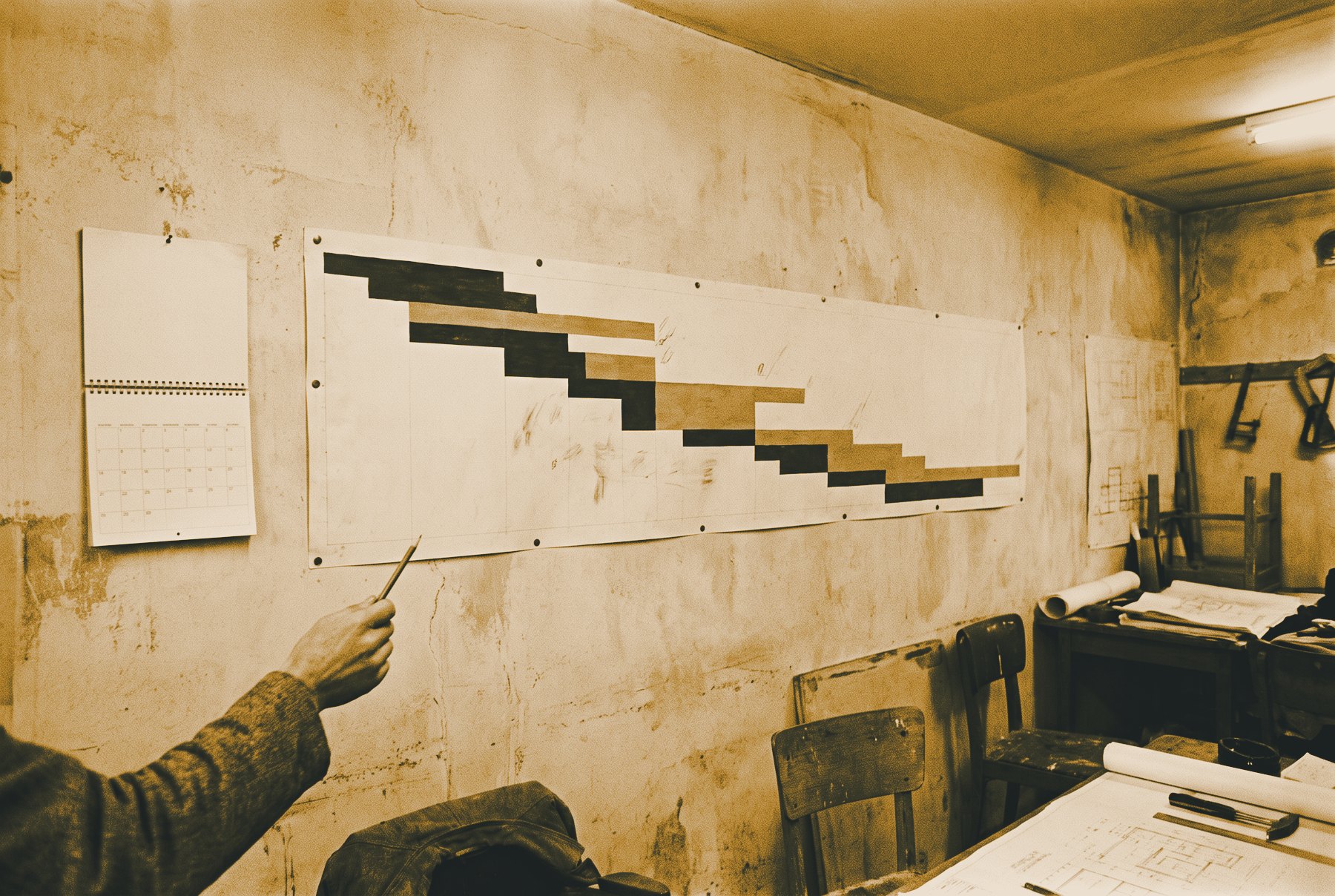
The detail matters because NEC measures everything against it. Several compensation events are triggered by dates "shown on the Accepted Programme", such as late access (60.1(2)) and the Client not providing something in time (60.1(3)). Delay is assessed by how far, due to the compensation event, planned Completion is later than on the Accepted Programme current at the dividing date (cl 63.5). Where the Contract Data names no programme, a quarter of the Price for Work Done to Date is held back until the contractor submits one showing the required information (cl 50.5). With no Accepted Programme at all, the Project Manager assesses its own programme for the remaining work and uses that (cl 64.2). A contractor without an accepted programme lets the Project Manager draw the ruler it will be measured against.
Which programme counts can decide a case. Premier Modular (TCC, 2026) concerned a barn theatre at Maidstone Hospital, built under NEC4 Option A. The adjudicator found a compensation event under 60.1(3) because the employer had not provided a water main by dates in a revised programme. Neither party said that programme was the Accepted Programme, and the Accepted Programme contained no such dates (Premier Modular [42]). The judge called this a startling conclusion that should have been put to the parties. In his words, the adjudicator went off on a "frolic" by, in effect, inventing a case for the contractor ([42]). The judge refused summary judgment to enforce the decision, because the Trust had a real prospect of showing a breach of natural justice ([48]-[51]). The case is about fair procedure; I know of no reported English decision construing NEC4's time and compensation-event clauses.
FIDIC 2017 asks for a full critical path programme. The contractor submits it within 28 days of the notice to start work, showing all activities logically linked, with earliest and latest dates, the float (if any) and the critical path or paths (8.3). It is revised whenever it stops reflecting actual progress. The Engineer has 21 days to object to an initial programme and 14 days for a revised one. Silence is a deemed Notice of No-objection, and the programme becomes "the Programme". That is not approval. Nor is a programme a claim: nothing in it relieves the contractor of any obligation to give a Notice (8.3).
JCT DB 2016 has no programme clause in its conditions, so look for programme duties in the Employer's Requirements. JCT's SBC 2016 requires a master programme identifying the critical paths where the Contract Particulars ask for one (cl 2.9.1.2). It then says the master programme imposes no obligation beyond the Contract Documents (cl 2.9.3). Under SBC the programme is a tool for managing the job and evidence of the plan, and adds no duties of its own.
Float is the other half of the programme question. The model project plans to finish in week 34 against a contract date of week 36. Does an employer's delay that eats those 2 weeks earn an extension? The answer depends on what the extension clause measures delay against. If the question is "will the event make you late for the contract date?", the slack absorbs the event and the date is not delayed. If it is "will the event make you later than you planned?", any push to the planned finish counts. The SCL Protocol agrees: where time is extended only for delay beyond the contract completion date, total float has to be used up before an EOT will be due. Where the test is the planned date, the float will probably not be available to the employer (SCL 8.2).
JCT DB 2016 extends time where completion is likely to be delayed beyond the relevant Completion Date (cl 2.25.1, quoted in Mace [44]). On the Protocol's reading the float goes first, which is why the model project's JCT answer is 1 week. NEC4 measures how far planned Completion moves (cl 63.5). On its wording the contractor keeps the gap between planned Completion and the Completion Date, so the NEC answer is 3 weeks. No court has decided that reading, and what the contractor keeps also depends on what the Accepted Programme shows, including its time risk allowances. FIDIC's programme must show float, but 8.5 asks only whether completion "is or will be delayed". It does not say whether that is measured against the Time for Completion or the Programme's planned completion. No English judgment decides who owns float under any form.
16.5 Damages, early warning and acceleration
Liquidated damages save the employer proving its loss from late completion, and they cap the contractor's exposure. They run from the completion date, so every extension of time reduces them. Chapter 9 has the law; each form adds its own conditions.
JCT DB 2016 sets the rate in the Contract Particulars. The employer must first issue a Non-Completion Notice (cl 2.28), and must tell the contractor before the due date for the final payment that it may require or deduct the damages (cl 2.29.1). If a later Completion Date is fixed, damages already recovered for the period are repaid (cl 2.29.3). NEC4 has delay damages only if the parties choose Option X7. Since the October 2020 amendments they run until the earlier of Completion, the date on which the Client takes over the works and the date on which the Project Manager issues a termination certificate. The earlier text did not mention termination. The change matches the default rule the Supreme Court stated the next year in Triple Point: unless the clause clearly says otherwise, liquidated damages run up to termination and not beyond (Triple Point [86]). Part of the reason, as Lord Leggatt put it, is that once the contract is terminated, the time taken to complete the work is entirely outside the control of the original contractor ([85]). If the Completion Date later moves, the Client repays the damages with interest (X7.2).
FIDIC 2017 sets a daily rate of Delay Damages in the Contract Data, up to any maximum stated there, and the Employer must claim them under 20.2 (8.8). They are the only damages due for late completion, except where the Employer terminates for default before completion. The cap does not apply in cases of fraud, gross negligence, deliberate default or reckless misconduct. Unlike NEC, 8.8 says nothing about repayment after a later extension.
NEC4 goes furthest with early warning. The contractor and the Project Manager each give an early warning as soon as either becomes aware of a matter that could raise the Prices or delay Completion or a Key Date (cl 15.1). The warnings go on a register, and at early warning meetings the parties look for ways to reduce the effect (cl 15.2, 15.3). The sanction goes to money, not entitlement. If the contractor failed to give a warning that an experienced contractor could have given, the event is assessed as if the Contractor had given the early warning (cl 61.5, 63.7). That is ordinary causation. The Client should not pay for the part of the effect a warning would have avoided.
FIDIC 2017 requires each party and the Engineer to warn of probable events that may delay the works or raise the price (8.4). It states no consequence, but failing to warn may be a breach, and prior knowledge can count when a late Claim is considered (20.2.5). JCT DB 2016 has no early-warning clause. Its Supplemental Provisions, which apply unless the Contract Particulars say otherwise, ask the parties to work collaboratively and to notify each other promptly of likely disputes. JCT's booklet says the 2024 edition makes three former supplemental provisions, including these two, mandatory.
Acceleration is a different bargain. The contractor agreed to finish by the completion date, not before it, so earlier completion has to be asked for and paid for. NEC4 makes it consensual: either side may propose it, the contractor quotes, and an accepted quotation changes the Prices and the dates (cl 36). JCT DB 2016 lets the employer invite an Acceleration Quotation, and the contractor need not accelerate until the employer confirms acceptance (Supplemental Provision 4). FIDIC adds a power for the contractor's own lateness. If progress is too slow for reasons not listed in 8.5, the Engineer may instruct the contractor to submit a revised programme describing the methods it proposes to speed up progress. The contractor adopts them at the Contractor's risk and cost, and the Employer can recover its own extra costs on top of Delay Damages (8.7). Chapter 10 deals with acceleration nobody instructed.
On concurrent delay, FIDIC 2017 is the only one of the three that says anything. The extension is assessed under the rules and procedures stated in the Special Provisions, or, if there are none, "as appropriate taking due regard of all relevant circumstances". JCT DB 2016 and the NEC4 ECC contain no concurrency provision, so English law applies its default: time but not money.
16.6 Disputes, and the numbers that moved
The route for challenging a delay decision depends on the law behind the form. In the UK, the Construction Act gives a party to a construction contract the right to refer a dispute arising under the contract to adjudication. The procedure must let it give notice at any time (s.108). The decision binds until the dispute is finally decided by a court, an arbitrator or agreement. UK forms are built round that right. FIDIC is written for use in many countries, so it builds its own dispute board instead. Chapter 15 covers adjudication and arbitration.
JCT DB 2016 lets either party refer a dispute to adjudication under the Scheme for Construction Contracts (Article 7, cl 9.2). Final decisions go to the English courts unless the Contract Particulars choose arbitration (Articles 8 and 9). NEC4 has two options. Option W2 is for contracts the Construction Act covers. Either party may refer a dispute to the Adjudicator at any time. A party that wants the tribunal must notify its dissatisfaction within four weeks of the decision, or the decision becomes final and binding (W2.3(11), W2.4). Option W1 is for contracts outside the Act. There a dispute goes first to Senior Representatives, and one not notified and referred within the contract's time limits cannot be referred later (W1.3(2)).
FIDIC 2017 has three steps. A party dissatisfied with the Engineer's determination must give a Notice of Dissatisfaction within 28 days, or the determination becomes final and binding (3.7.5). The dispute then goes to the Dispute Avoidance/Adjudication Board, which decides within 84 days or another period it proposes and both parties agree (21.4.3). Its decision is binding on both Parties at once. A party that wants to arbitrate must give a further Notice of Dissatisfaction within 28 days of the decision; otherwise the decision becomes final and binding (21.4.4). ICC arbitration can then start 28 days after that notice, even without an attempt at amicable settlement (21.5, 21.6). That is the 2017 first printing; check the 2022 reprint before relying on it.
The last trap is numbering. Clause numbers move between editions and between forms in the same family, and a correct rule cited to the wrong clause misleads.
| Clause | What it is | Watch for |
|---|---|---|
| FIDIC 2017 8.5 | Extension of Time for Completion | In FIDIC 1999 the extension clause is 8.4, and 8.5 is delays caused by authorities (now 8.6) |
| FIDIC 2017 20.2.1 | the Notice of Claim | The 1999 clause is 20.1, the one in Obrascon and Uniform Building Contractors |
| FIDIC Red and Yellow 2017 8.5(c) | exceptionally adverse climatic conditions | In the Silver Book 2017, 8.5(c) is employer prevention, and there is no weather ground |
| NEC4 63.6 | "only rights" in a compensation event | NEC3 has the same words at 63.4 |
| JCT DB 2016 2.26.8 | exceptionally adverse weather | In DB 2024, 2.26.8 is the change-in-law event (JCT News, October 2025) |
| JCT DB 2016 2.24 to 2.29 | notice, extension and damages | SBC 2016 numbers the same machinery 2.27 to 2.32 |
FIDIC's printings differ as well: the 2022 reprint reworded the one-way review in 8.5. Cite the edition and the printing with the clause, every time.
Checklist
- Identify the form, the edition, the printing and every amendment before reading any clause.
- Find the time list and the money list, and check whether they are one list or two.
- Read the notice clause for its trigger, its clock and what happens if you miss it.
- Find out who decides, how long they have, and whether the decision can go down later.
- Check what delay is measured against: the contract date or the planned finish. That decides the float.
- Find out what programme is required, and what happens if none has been accepted.
- Work out the currency of the money: actual cost, forecast cost, and whether profit is included.
- Map the dispute route and its deadlines before the first decision you disagree with.
Each rule in this chapter has a chapter of its own. Extensions of time are in chapter 3, notices in chapter 4, the certifier in chapter 5 and the money in chapter 13.